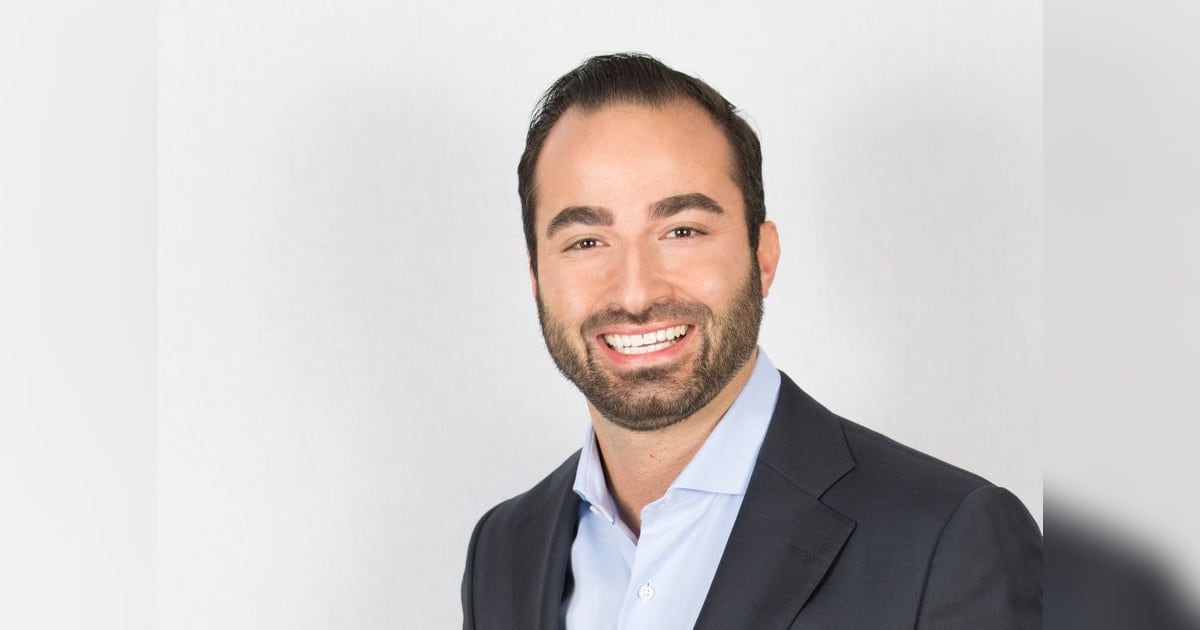
Capital Discipline Becomes Critical as Growth Slows Hotel owners must shift their 2027 investment strategy from wish lists to returns-based decisions, according to Justin Jabara, president of Meyer Jabara Hotels. The advice comes as the industry prepares for a significant slowdown: U.S. RevPAR is forecast to grow just 2.1% in 2027, down from an expected 4.4% in 2026, with ADR growth slowing to 1.6% and demand increasing only 1.1%, according to STR and Tourism Economics forecasts. "In a lower-growth environment, operational execution and capital discipline become even more important," Jabara writes. The 49-year-old management company, which operates 45 hotels and 36 food-and-beverage outlets across 20 states, is using its approaching 50th anniversary to reset industry thinking around capital allocation.
Separate Event-Driven Demand From Recurring Revenue Owners should not assume 2026's extraordinary performance—driven partly by the World Cup and record room-night sales—will repeat. U.S. hotels sold 11.4 million more room nights in the first half of 2026 than the same period in 2025, and RevPAR grew 6.2% year-over-year for the week ending August 15, marking 19 consecutive weeks of growth. But Jabara cautions: "Understand what drove your property's 2026 results. Separate recurring demand from event-driven demand, then build 2027 expectations market by market and hotel by hotel." A full-service hotel dependent on group business faces a different outlook than a select-service property driven by corporate transient demand or one serving leisure travelers.
CapEx Must Deliver Measurable Returns Every capital expenditure should answer at least one question: Does it protect assets, improve guest experiences, lower operating costs, or create additional revenue? Some investments are unavoidable—roofs, HVAC, elevators, plumbing, and life-safety systems. But others require ROI justification. "Growth-oriented CapEx could underutilize space become a revenue-producing venue? Could an energy-management system lower utility expense? Could technology reduce repetitive work? Could a renovation reposition the property and support a higher ADR?" Jabara asks. "The important word is return. In 2027, capital needs to work harder."
Lenders Expect Operating Stories The lending environment remains active: U.S. hotel debt liquidity improved in 2025 with $64 billion in originations, and approximately $88 billion in hotel loans are scheduled to mature through 2027, according to JLL's 2026 Global Hotel Investment Outlook. But lenders increasingly want credible plans from borrowers. "Owners facing refinancing while also confronting a PIP or major renovation need a credible plan. Lenders want to understand not only what a property is worth today, but how it will perform tomorrow," Jabara explains. "That makes the operating story critical. What is the hotel's competitive position? What is driving demand? Where can margins improve?"
Luxury Outperforms; Extended Stay and Group Demand Show Strength Segment performance remains uneven. CBRE's midyear hotel outlook forecasts luxury RevPAR growth of 5.2% in 2026, compared with 0.7% for midscale and a 0.6% decline for economy. STR expects select-service properties to finish 2026 with approximately 3.6% RevPAR growth. Extended stay remains attractive due to longer stays and demand from corporate assignments, healthcare, and relocation. Convention-linked group RevPAR was up 5.4% year-over-year through April, with momentum expected to continue into 2027. However, Jabara warns against chasing segments based on current performance: "No hotel segment is universally superior. The right asset in the right market with the right cost structure and operating strategy can outperform the hottest segment in the wrong location."
Profitability, Not RevPAR, Becomes the Focus The most significant shift owners need to make is moving beyond RevPAR. "RevPAR will always be an important benchmark, but it doesn't tell the full story of an asset's revenue potential or its profitability," Jabara states. With STR expecting hotel expenses to grow faster than revenues, owners must ask: "How do we make profit grow faster than revenue?" The answer lies in capturing more of the total guest relationship through food and beverage, parking, meetings, upgrades, and premium amenities—a concept known as TRevPAR (Total Revenue Per Available Room). "Small amounts of revenue leakage across hundreds or thousands of transactions add up to meaningful dollars over the course of a year," Jabara notes. Food and beverage margins deserve particular attention given rising costs. "Menu pricing cannot be a once-a-year exercise," he writes. "Operators need to understand the true cost and contribution margin of what they sell."
Technology and AI Require ROI Justification Even technology investments must clear a profitability bar. "We should not buy technology simply because it is new. We should ask what revenue it generates, what expense it reduces, what employee time it saves or what guest friction it eliminates," Jabara advises. "If we cannot answer those questions, we should question the investment." About Meyer Jabara Hotels: The company owns and operates 45 branded and boutique hotels and 36 food-and-beverage outlets in 20 states. Under Jabara's leadership since January 2020, it has achieved 75% employee retention and all-time high performance and associate-engagement scores.
Why It Matters
As RevPAR growth moderates in 2027, hotel operators will face tighter margins and more selective lending.
Success will depend not on chasing segment trends or assuming 2026 repeat, but on disciplined capital allocation, margin protection, and holistic revenue capture—particularly in food and beverage and ancillary services. Owners who can articulate credible operating improvement plans will have better access to refinancing capital and stronger profitability trajectories.
For more insights and trends in the food and beverage sector, check out more articles in The Food & Beverage Magazine family of publications.
Written by FBM Publications Editors