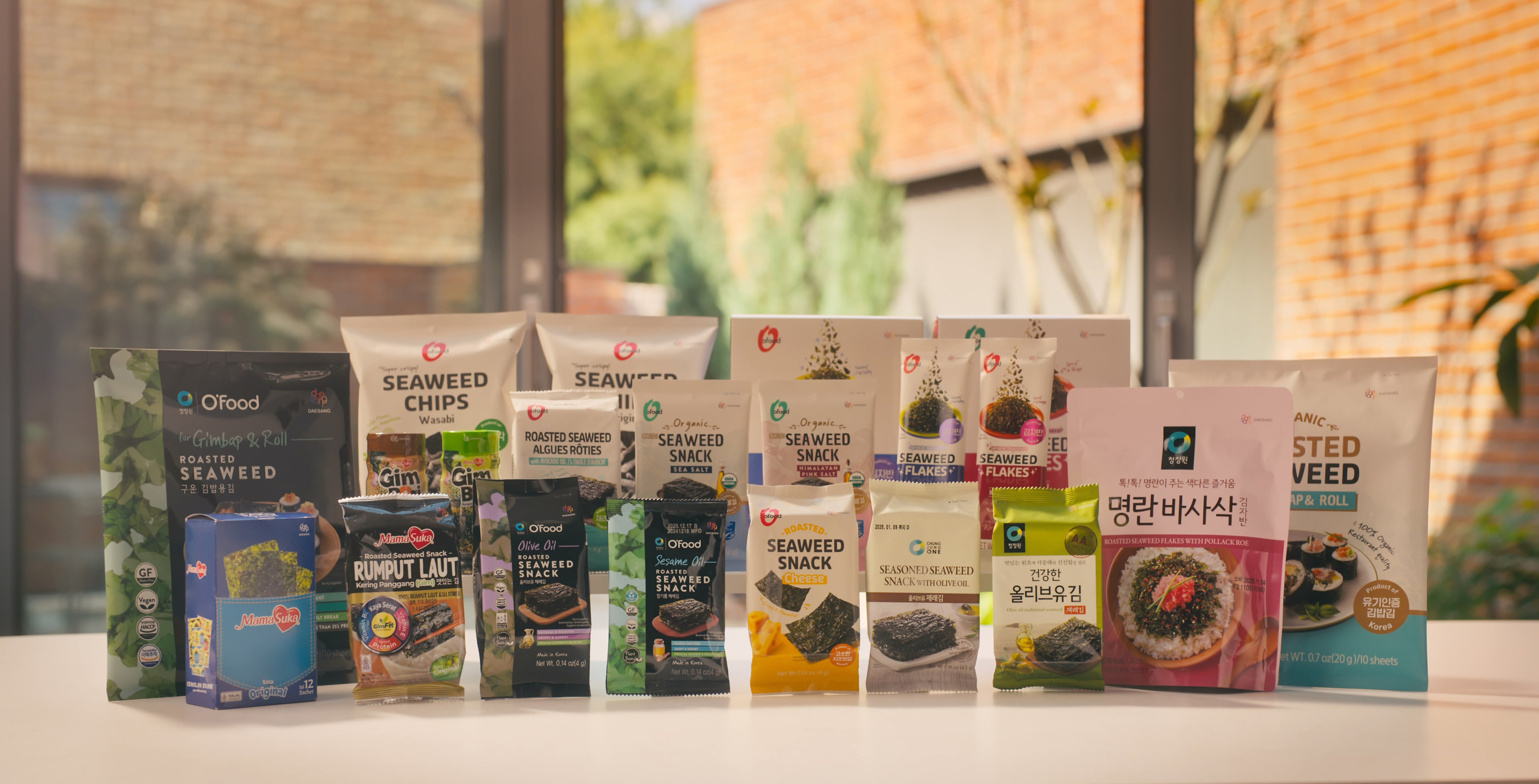
South Korean food company Daesang Corporation posted KRW 200 billion in processed seaweed sales in 2025—a roughly 30% year-over-year jump and more than three times the company's 2020 revenue in the category—as global appetite for Korean gim shows no sign of slowing. The figure includes export sales across approximately 50 countries and signals a category that has moved decisively from ethnic-aisle novelty to mainstream food product.
U.S. Push and Retail Gains
In North America, Daesang is pushing its Ofood brand beyond Asian specialty channels. In October 2026, the company secured placement for its Ofood Stick Gimjaban—seasoned seaweed flakes—at Publix, one of the largest supermarket chains in the southeastern United States. The move reflects a broader shift in American consumption habits: gim is increasingly appearing not just as a standalone snack but as a topping for salads, noodles, and fried rice. For foodservice operators, that versatility positions seaweed-based ingredients as a low-cost, high-margin finishing component with strong consumer familiarity across multiple dayparts. Similar momentum is building in Oceania, where Daesang's Korean-made seasoned gim earned the highest evaluation grade at New Zealand retailer PAK'nSAVE, securing placement across all stores in the chain.
Production Scale and Localization
Daesang operates local production facilities in Indonesia and Vietnam, with a combined annual gim production capacity of 1,500 metric tons. In both markets the company holds the No. 1 market share position—selling under the MamaSuka brand in Indonesia and Ofood in Vietnam. A new local production operation launched in China in 2026 is broadening the portfolio to include low-sodium gim targeting health-conscious consumers, alongside premium Korean-style seasoned varieties. Across Southeast Asia, the company is extending its snack range with regionally popular flavors such as cheese and BBQ.
Quality control underpins the global strategy. Since opening its Seaweed Research Center in Mokpo, South Jeolla Province in 2017, Daesang has operated a proprietary Gim Quality Grading System that evaluates dried gim against 13 criteria—including protein content, moisture, taste, texture, and color—and classifies raw material into nine grades. The system allows the company to match raw inputs to specific product applications and regional standards, a capability that becomes increasingly important as it enters more demanding retail environments like U.S. mass grocery.
Climate Risk and Supply Chain R&D
Looking further out, Daesang is investing in land-based aquaculture to reduce exposure to climate-related disruptions in raw gim supply. In 2025, the company was selected as a joint R&D participant in two programs under South Korea's Ministry of Oceans and Fisheries project targeting sustainable, high-quality gim seed production and land-based cultivation technologies. By 2029, Daesang aims to develop a land-based system capable of year-round mass production, a development that could meaningfully stabilize ingredient costs for the processed seaweed category globally.
The company also plans to redesign Ofood gim packaging for stronger shelf appeal and expand its lineup of versatile formats—including gimjaban, furikake, and gimbukak (crispy seaweed chips)—that cross over between snacking and foodservice meal applications. For operators already tracking Korean cuisine's impact on menu innovation and global ingredient sourcing, Daesang's scale and supply-chain investments make it a supplier worth watching as seaweed moves further into the culinary mainstream.
Written by Michael Politz, Author of Guide to Restaurant Success: The Proven Process for Starting Any Restaurant Business From Scratch to Success (ISBN: 978-1-119-66896-1), Founder of Food & Beverage Magazine, the leading online magazine and resource in the industry. Designer of the Bluetooth logo and recognized in Entrepreneur Magazine's "Top 40 Under 40" for founding American Wholesale Floral, Politz is also the Co-founder of the Proof Awards and the CPG Awards and a partner in numerous consumer brands across the food and beverage sector.