A School Built for the Promoted Cook Chef Brian West believes every professional kitchen contains a dragon: the full dining room, the missing delivery, the broken sauce, the clock that refuses to slow down. After 30 years as a chef, restaurateur, and instructor—including time as a senior instructor at the Culinary Institute of America—he's building a school around learning to master that chaos. West Point Culinary Institute, a Texas 501(c)(3) nonprofit, launches in 2027 with a four-month program designed explicitly for working professionals. The curriculum combines culinary fundamentals, food costing, purchasing, sanitation, kitchen operations, leadership, communication, and team management. Students spend three months in hands-on kitchen instruction in small cohorts, followed by a one-month internship or externship in a commercial kitchen. The program operates primarily on scholarships. "Cooking is science, craft and instinct, but running a professional kitchen requires something more," said Chef West. "You have people, money, products, equipment, time and expectations all colliding at once. A chef has to learn how to bring order to that without destroying the creativity and humanity that make restaurants special."
From Surviving to Understanding West's teaching philosophy, called Taming the Dragon, breaks chef development into four stages. The first—Surviving the Dragon—focuses on craft, discipline, and preparation through mise en place and technique. Commanding the Dragon introduces strategy, systems, and delegation. Understanding the Dragon moves beyond operations into mentorship and accountability. The final stage, Enter the Dragon, asks students to examine their own character and temperament. Chef West emphasizes teaching the science behind technique, not just recipes. "I don't want to teach somebody 100 recipes," he said. "I want them to understand what is happening inside the pan. Why does meat brown? Why does an emulsion break? What happens to collagen during a braise? Once you understand why food behaves the way it does, recipes stop being instructions and start becoming possibilities." The curriculum includes emphasis on Texas culinary heritage, reflecting West's earlier work founding Taste of the Republic, an annual Fiesta San Antonio event celebrating Texas food culture.
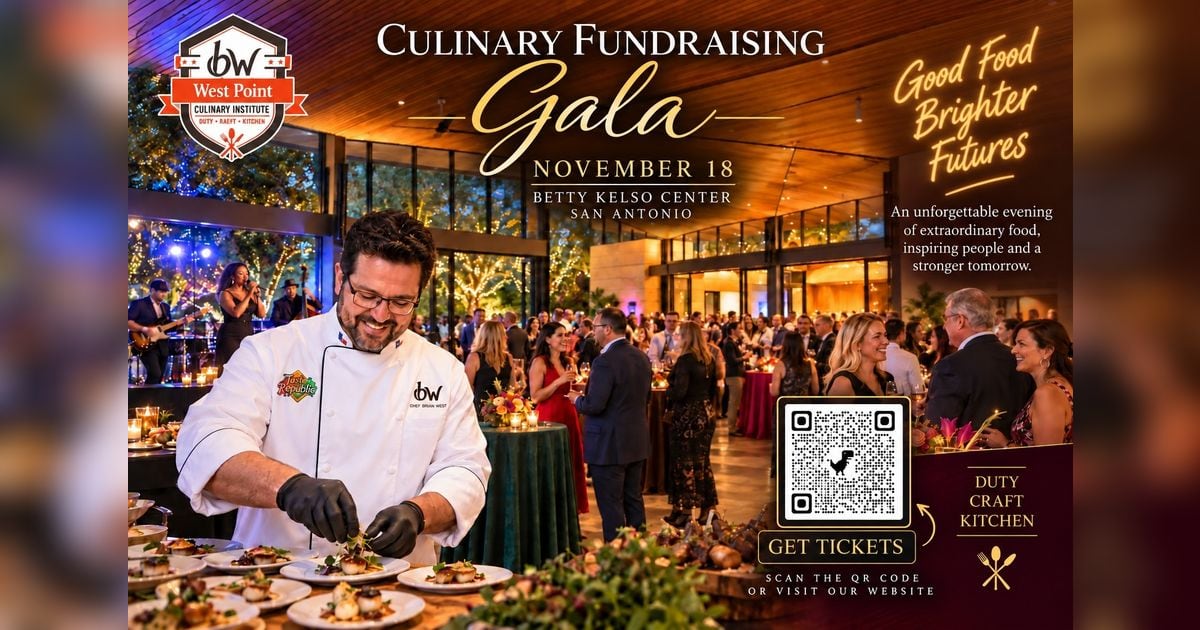
Launch Gala and Capital Campaign West Point Culinary Institute will celebrate with its inaugural gala, "From Fire to Future," on Wednesday, November 18, 2026, at the Betty Kelso Center in the San Antonio Botanical Garden. Guest chefs include Nicola Blaque of The Jerk Shack and Kristina Zhao of Dashi Chinese Kitchen + Bar and Sichuan House. The evening features a multi-course experience, live auction, and culinary lottery. Individual tickets start at $150. The gala launches the Institute's first capital campaign with a goal of raising $75,000 to build the school.
Why It Matters
According to Trinity University economists, the hospitality industry generated $23.4 billion in economic impact in San Antonio in 2024 and employed more than 150,000 people—more than one in every eight workers in the metro area. The Institute targets a persistent workforce gap: experienced cooks promoted to sous chef or kitchen manager roles without formal leadership or business training. By offering scholarships, the program aims to remove cost barriers that have historically limited access to culinary education for working-class cooks.
For more insights and trends in the food and beverage sector, check out more articles in The Food & Beverage Magazine family of publications.
Written by FBM Publications Editors
Frequently Asked Questions
What exactly is West Point Culinary Institute, and when does it launch?
It's a Texas-based 501(c)(3) nonprofit founded by Chef Brian West, a 30-year veteran and former CIA senior instructor, launching in 2027. The school targets working line cooks ready for leadership roles with a four-month, scholarship-driven program.
How is this different from traditional culinary schools like the CIA or Le Cordon Bleu?
West Point explicitly builds curriculum around kitchen operations, food costing, purchasing, and team management—not just technique. The program runs four months, not two years, and pulls students directly into small hands-on cohorts followed by real commercial kitchen externships.
What's the 'Taming the Dragon' framework Chef West uses?
It's a four-stage teaching philosophy: Surviving the Dragon (craft and mise en place), Commanding the Dragon (systems and delegation), Understanding the Dragon (mentorship and accountability), and Enter the Dragon (examining personal character). Each stage builds from technique into professional kitchen leadership.
How much does the program cost, and who pays for it?
West Point operates primarily on scholarships—tuition isn't the revenue model here. The nonprofit structure means the school absorbs costs, making it accessible to line cooks who can't afford traditional $30K-$60K culinary programs.
Can current line cooks actually attend while working, or is this full-time only?
The program is structured for working professionals: three months of intensive hands-on kitchen instruction in small cohorts, then one month of internship or externship in a commercial kitchen. It's designed around your current kitchen life, not against it.