Food and cultural programming have taken center stage at the 140th Canton Fair, now midway through Phase 2 (October 23–27), as organizers deploy Cantonese dining experiences and traditional craftsmanship demonstrations to deepen engagement with international buyers beyond the exhibition floor.
Food as a Trade Tool
The Canton Cuisine event transformed sections of the fairgrounds into an immersive showcase of Lingnan culinary culture, where visitors sampled canonical Cantonese dishes including shrimp dumplings and siu mai alongside interactive experiences rooted in the region's food traditions. A dedicated intangible cultural heritage zone featured 30 representative heritage projects — among them Cantonese tea culture ceremonies, pastry mold printing, and olive-pit carving — underscoring how hospitality-adjacent programming is increasingly being used to build buyer relationships at major global trade events. For foodservice and hospitality operators sourcing from Asia, this kind of embedded cultural context can meaningfully shape supplier relationships and product selection decisions.
The food angle extends into wellness as well. A team of 25 traditional Chinese medicine experts stationed at the Canton Fair Convention Center offered acupuncture demonstrations, herbal tea tastings, and nutritional therapy product experiences — categories that continue to draw interest from health-focused F&B brands and wellness-oriented hospitality operators worldwide. This intersection of food, culture, and wellness reflects broader category trends covered in our beverage industry analysis, where functional and heritage-rooted ingredients are commanding growing shelf and menu space.
Culture on the Exhibit Floor
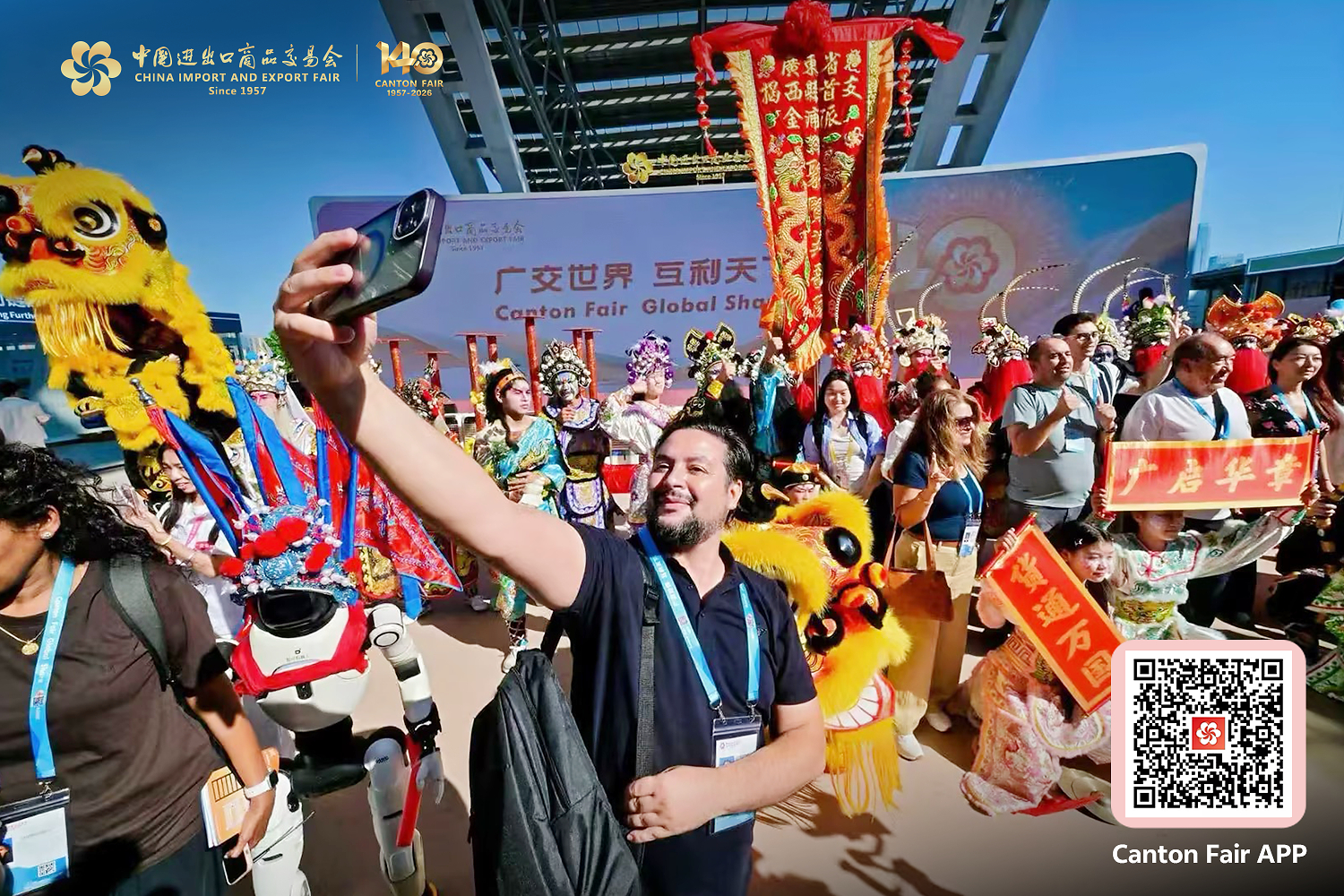
Beyond the dedicated food zone, cultural programming wove through the fair's commercial exhibits. A representative inheritor of Foshan Wing Chun under the Ip Man lineage performed alongside a humanoid robot during the Phase 1 opening ceremony — a pairing that encapsulated the fair's effort to bridge centuries-old tradition with advanced manufacturing technology. Products across leather goods, jewelry, home décor, and accessories categories showcased intangible cultural heritage techniques, a design approach that resonates with hospitality buyers seeking differentiated tableware, décor, and artisan goods for restaurant and hotel environments.
Networking events including the Canton Fair Global Cooperative Partners Carnival, Benelux Night, and Canada Night extended buyer-exhibitor relationship building off the show floor, providing the kind of informal hospitality context that trade professionals increasingly value as sourcing decisions grow more relationship-driven.
For operators and procurement professionals tracking international sourcing trends, the 140th Canton Fair's programming signals a broader shift: large-scale trade exhibitions are evolving into multi-sensory hospitality experiences designed to retain buyer attention and foster loyalty. The strategy aligns with what restaurant technology and experience coverage has documented domestically — that immersive engagement, not just product display, drives lasting commercial outcomes. As Food & Beverage Magazine has noted across its global sourcing coverage, cultural fluency is becoming a competitive differentiator for both buyers and suppliers navigating complex international trade relationships.
Written by Michael Politz, Author of Guide to Restaurant Success: The Proven Process for Starting Any Restaurant Business From Scratch to Success (ISBN: 978-1-119-66896-1), Founder of Food & Beverage Magazine, the leading online magazine and resource in the industry. Designer of the Bluetooth logo and recognized in Entrepreneur Magazine's "Top 40 Under 40" for founding American Wholesale Floral, Politz is also the Co-founder of the Proof Awards and the CPG Awards and a partner in numerous consumer brands across the food and beverage sector.