Convenience stores command a loyal weekly audience, but new research from Acosta Group shows the channel is leaving significant food and beverage revenue on the table. More than half of c-store shoppers buy food or beverages from the channel at least once a week, yet the study — released ahead of the 2026 NACS Show — makes clear that convenience alone isn't enough to capture the full range of occasions those shoppers are already spending on elsewhere.
The survey, conducted Aug. 26–31, 2026, among 775 U.S. shoppers who had visited a c-store in the prior three months, benchmarks the channel against grocery, mass retail, fast food, and coffee shops. The competitive picture is striking: 81% of c-store shoppers also buy food and beverages from fast-food restaurants, 78% from mass merchandisers, and 77% from traditional grocery stores — signaling a channel-fluid consumer base that makes purchase decisions based on occasion, not loyalty.
What Shoppers Say They Need
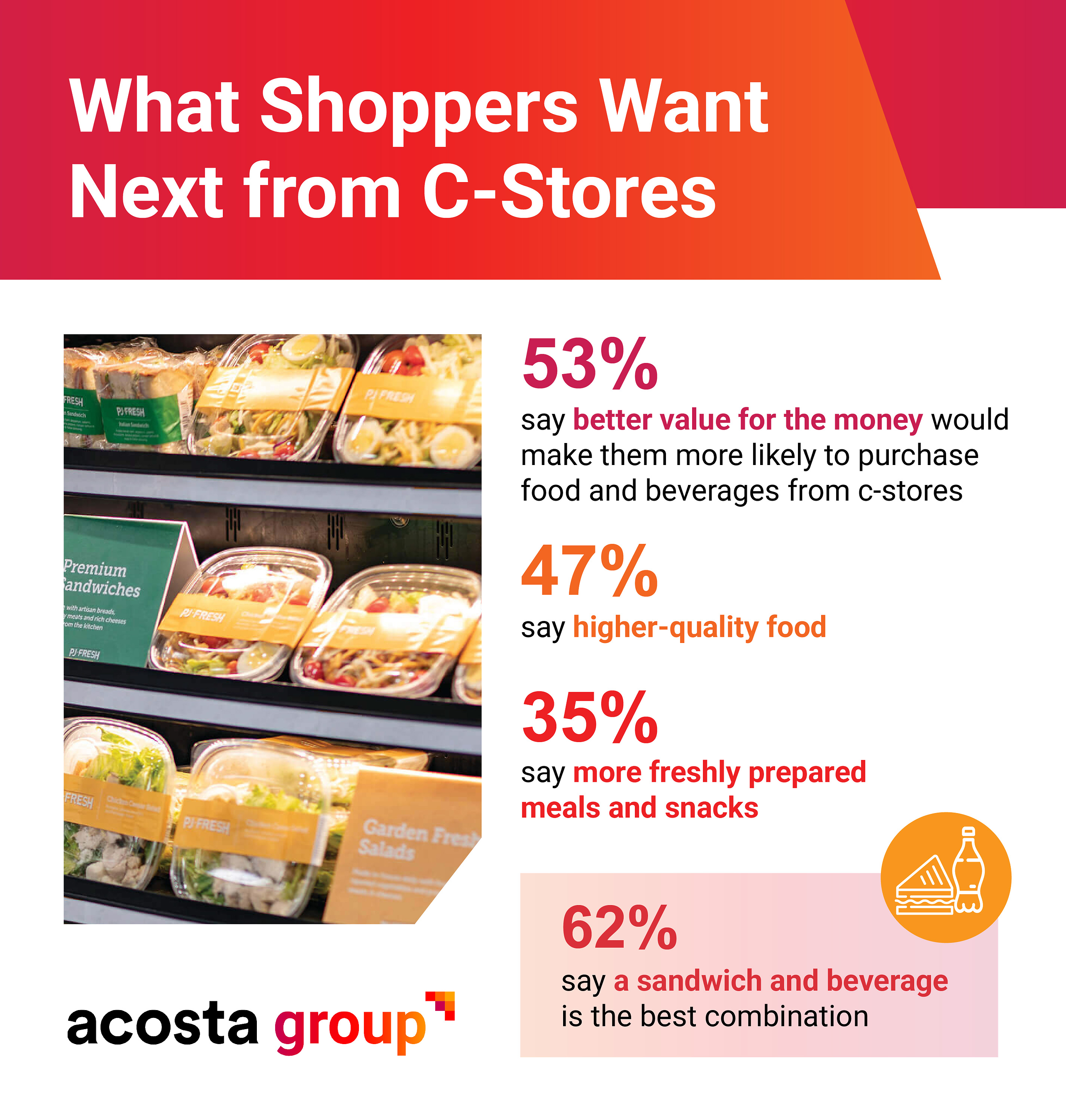
Value is the single clearest growth lever. Fifty-three percent of shoppers said better value for the money would make them more likely to buy food and beverages from c-stores in the future. Higher-quality food ranked second at 47%, followed by more freshly prepared meals and snacks at 35%. The data point most immediately actionable for operators: 84% of respondents had already purchased prepared food from a c-store in the past three months, and a sandwich paired with a beverage was the most appealing combination tested, selected by 62% of shoppers. The demand exists — the execution gap is what's limiting basket size.
"Convenience stores have earned an incredibly valuable position with shoppers because they solve real needs quickly, but convenience alone isn't enough to win every occasion," said Kathy Risch, SVP of Shopper Insights and Thought Leadership for Acosta Group. "When c-stores pair their inherent advantage in speed and accessibility with fresh, high-quality food and beverage offerings, they have an opportunity to compete for occasions shoppers may be taking elsewhere today."
The Foodservice Competitive Set
For c-store operators and the brands supplying them, the competitive set is effectively the entire away-from-home foodservice landscape. Fast-food restaurants dominate quick-meal and craving occasions; coffee shops compete hard for beverages and indulgent dayparts. C-stores, meanwhile, over-index on travel days (37% of shoppers cite road trips as a c-store occasion) and proximity-driven stops (32%). These are high-frequency but low-basket moments that operators can expand by building out credible foodservice programs.
Travis King, President of CORE Away From Home, framed the stakes plainly: "Consumers aren't thinking about channels when hunger hits; they're deciding what can satisfy the occasion. That creates an opportunity for c-stores to strengthen fresh food and foodservice programs and compete for meals that might otherwise go to a restaurant."
Health and wellness represents another pathway. Nearly three-quarters of shoppers said healthier or better-for-you options are at least somewhat important when shopping c-stores, with freshly prepared foods, fresh fruits and vegetables, and high-protein items generating the most interest. For operators already investing in foodservice program development, that consumer signal is worth prioritizing in assortment planning.
For brands and distributors navigating beverage industry trends inside the convenience channel, the research reinforces that bundled meal solutions — not single SKUs — are increasingly how c-stores can compete with quick-service restaurants for the lunch and snack dayparts. Assortment relevance, visibility at the shelf, and compelling price-value positioning are the variables separating channels in a shopper's split-second decision.
Written by Michael Politz, Author of Guide to Restaurant Success: The Proven Process for Starting Any Restaurant Business From Scratch to Success (ISBN: 978-1-119-66896-1), Founder of Food & Beverage Magazine, the leading online magazine and resource in the industry. Designer of the Bluetooth logo and recognized in Entrepreneur Magazine's "Top 40 Under 40" for founding American Wholesale Floral, Politz is also the Co-founder of the Proof Awards and the CPG Awards and a partner in numerous consumer brands across the food and beverage sector.