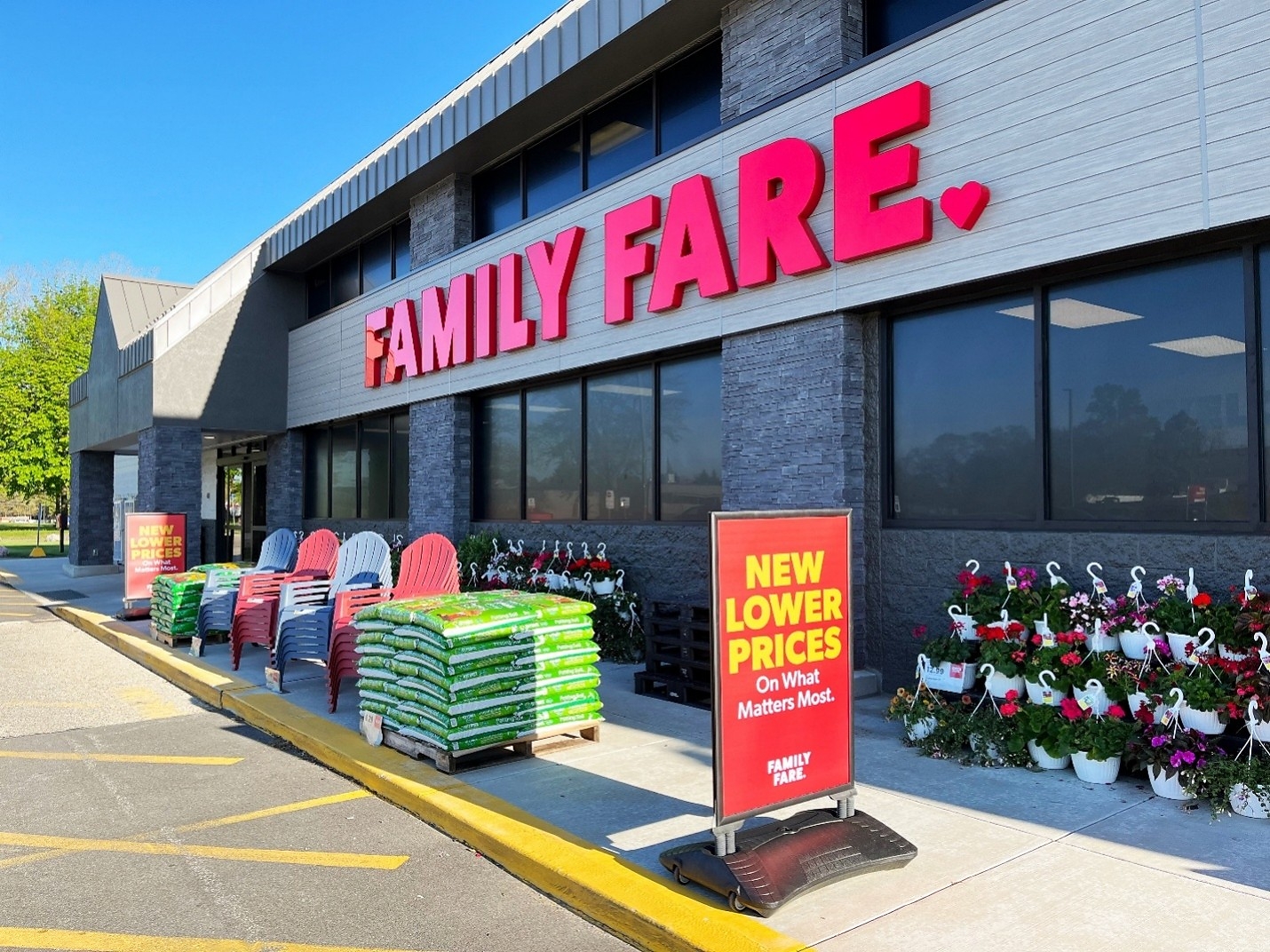
C&S Wholesale Grocers has cut prices by 6% to 15% on thousands of items across its company-operated Midwest grocery stores — Family Fare, VG's Grocery, Martin's Super Markets, and Piggly Wiggly — in a broad value push that began rolling out in May and spans eight states.
The initiative, branded internally as "New Lower Prices," covers Indiana, Iowa, Michigan, Minnesota, Nebraska, North Dakota, South Dakota, and Wisconsin. The targeted categories lean heavily into fresh: boneless chicken breasts, rib-eye steak, ground meat, Honeycrisp apples, bell peppers, and bananas all carry reduced shelf tags. The rollout also extends to household pantry staples, signaling that the price investment is meant to drive basket size, not just traffic on a single department.
Operator Implications
For food retail and foodservice supply professionals, the move illustrates a deliberate playbook increasingly common among regional grocery operators under pressure from discount and club-format competition: anchor on fresh protein and produce — the categories shoppers price-check most — then extend credibility across center-store. Fresh meat and produce pricing strategy has become a primary battleground for regional grocers trying to hold share against national discounters.
Eric Winn, chief executive officer of C&S Wholesale Grocers, framed the investment as a commitment to rural communities where many of the four banners operate. "By making everyday essentials more affordable, we are delivering real savings and continuing our commitment to being the hometown grocer of choice," Winn said. The rural-market angle is notable: those trade areas often have fewer competitive alternatives, yet consumer budget pressure is acute, making a sustained price investment a potential loyalty driver with meaningful long-term returns.
Loyalty & Digital Layer
C&S is pairing the shelf-price reductions with existing store rewards programs and digital coupons available through each banner's individual website, giving operators a mechanism to track incremental lift and deepen loyalty engagement beyond the in-store signage. That layered approach — permanent shelf price cuts plus digital offers — reflects a broader shift in grocery loyalty and digital coupon strategy as regional chains compete for wallet share with tech-forward rivals.
C&S, founded in 1918, operates more than 200 corporate-run grocery stores and runs 60 distribution centers nationwide through its family of companies, which includes SpartanNash, Grocers Supply, Hansen Distribution Group, and Davidson Specialty Foods. The scale of the distribution network gives the company meaningful leverage in negotiating cost reductions that can be passed through to shelf prices — a structural advantage smaller independent operators don't share. For suppliers and distributors watching the Midwest grocery landscape, the initiative signals that C&S is investing in its retail banners as a growth vehicle, not merely a wholesale adjacency.
Written by Michael Politz, Author of Guide to Restaurant Success: The Proven Process for Starting Any Restaurant Business From Scratch to Success (ISBN: 978-1-119-66896-1), Founder of Food & Beverage Magazine, the leading online magazine and resource in the industry. Designer of the Bluetooth logo and recognized in Entrepreneur Magazine's "Top 40 Under 40" for founding American Wholesale Floral, Politz is also the Co-founder of the Proof Awards and the CPG Awards and a partner in numerous consumer brands across the food and beverage sector.