Ten years after opening a single coffee shop in Wilmington, North Carolina, with 19 employees with intellectual and developmental disabilities, Bitty & Beau's Coffee has grown into a nationally recognized foodservice brand and advocacy platform — and it's using the anniversary to deliver a direct message to the broader restaurant industry: inclusive hiring is a competitive advantage, not a charitable concession.
The company now employs more than 500 people with intellectual and developmental disabilities (IDD) across its brick-and-mortar coffee shops and a growing fleet of mobile Coffee Cruisers. Co-founder and CEO Amy Wright frames the milestone not as a feel-good story but as a business case that every operator should study. "For years, businesses have looked at people with disabilities and asked, 'What accommodations will we have to make?'" Wright said. "We think employers should be asking a different question: 'What are we missing by not having these people on our team?'"
The Operational Model
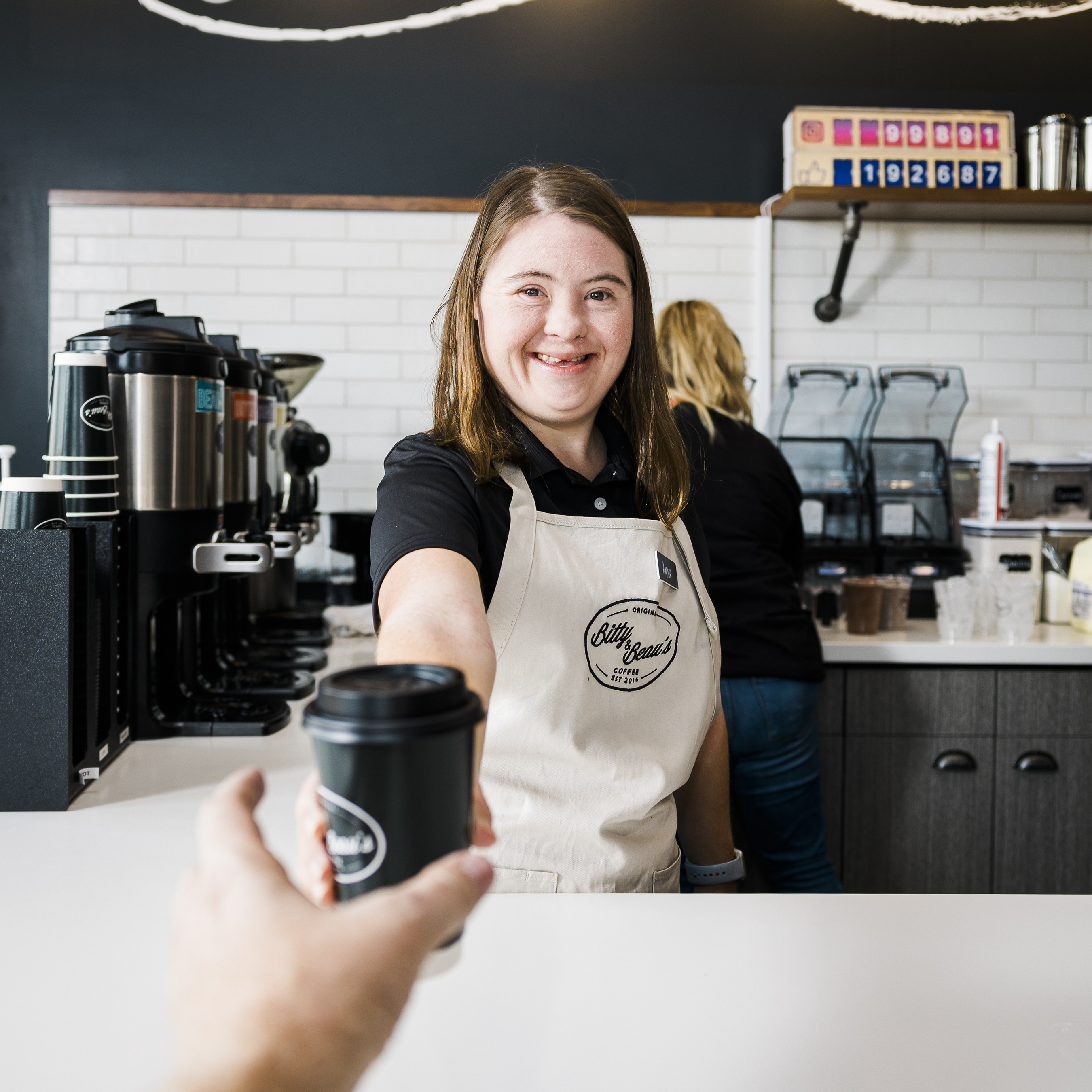
Bitty & Beau's deliberately places employees with IDD in highly visible, customer-facing roles — taking orders, preparing drinks, greeting guests, and stocking merchandise. The design is intentional. Wright argues that proximity drives attitude change in ways that policy alone cannot. "You can talk about inclusion all day long, but there is something powerful that happens when two people who might never otherwise meet are standing across a counter from one another," she said. "Perceptions change." For operators exploring inclusive staffing strategies in foodservice, that front-of-house visibility is a core feature of the model, not an accommodation made in spite of it.
Five Lessons for Operators
After a decade of running the concept, the company distills its experience into five principles relevant to any foodservice employer navigating a persistently tight labor market. First, high expectations matter: employees with disabilities perform best when given clear responsibilities and meaningful work. Second, different does not mean less — varied communication styles or learning approaches do not diminish a team member's value. Third, customers respond to authentic inclusion in ways that affect guest loyalty and brand perception. Fourth, employment delivers benefits well beyond a paycheck, including confidence, independence, and routine. Fifth, and perhaps most significant for the industry at large, inclusion works best when it becomes ordinary — when hiring people with disabilities stops being remarkable and simply becomes expected practice.
Those lessons arrive as the broader hospitality sector continues to grapple with chronic staffing shortages and elevated turnover rates. Operators and HR leaders tracking restaurant labor trends have increasingly looked beyond traditional talent pools, and disability employment programs have gained traction as a sustainable staffing strategy. Bitty & Beau's model, now a decade old and operating at scale, provides one of the foodservice industry's most documented examples of that approach working in practice.
Wright's long-term ambition extends past the brand's own footprint. "The dream was never that everyone with a disability would work at Bitty & Beau's Coffee," she said. "The dream is that one day every business will see what we see — that people with disabilities have enormous value to contribute. Every interaction is an opportunity to change someone's perspective. And when that person goes back to their own workplace, school or community and sees people with disabilities differently, that's how real change happens." For restaurant and hospitality operators looking to build more resilient, purpose-driven teams, that decade of evidence is now available to learn from.
Written by Michael Politz, Author of Guide to Restaurant Success: The Proven Process for Starting Any Restaurant Business From Scratch to Success (ISBN: 978-1-119-66896-1), Founder of Food & Beverage Magazine, the leading online magazine and resource in the industry. Designer of the Bluetooth logo and recognized in Entrepreneur Magazine's "Top 40 Under 40" for founding American Wholesale Floral, Politz is also the Co-founder of the Proof Awards and the CPG Awards and a partner in numerous consumer brands across the food and beverage sector.