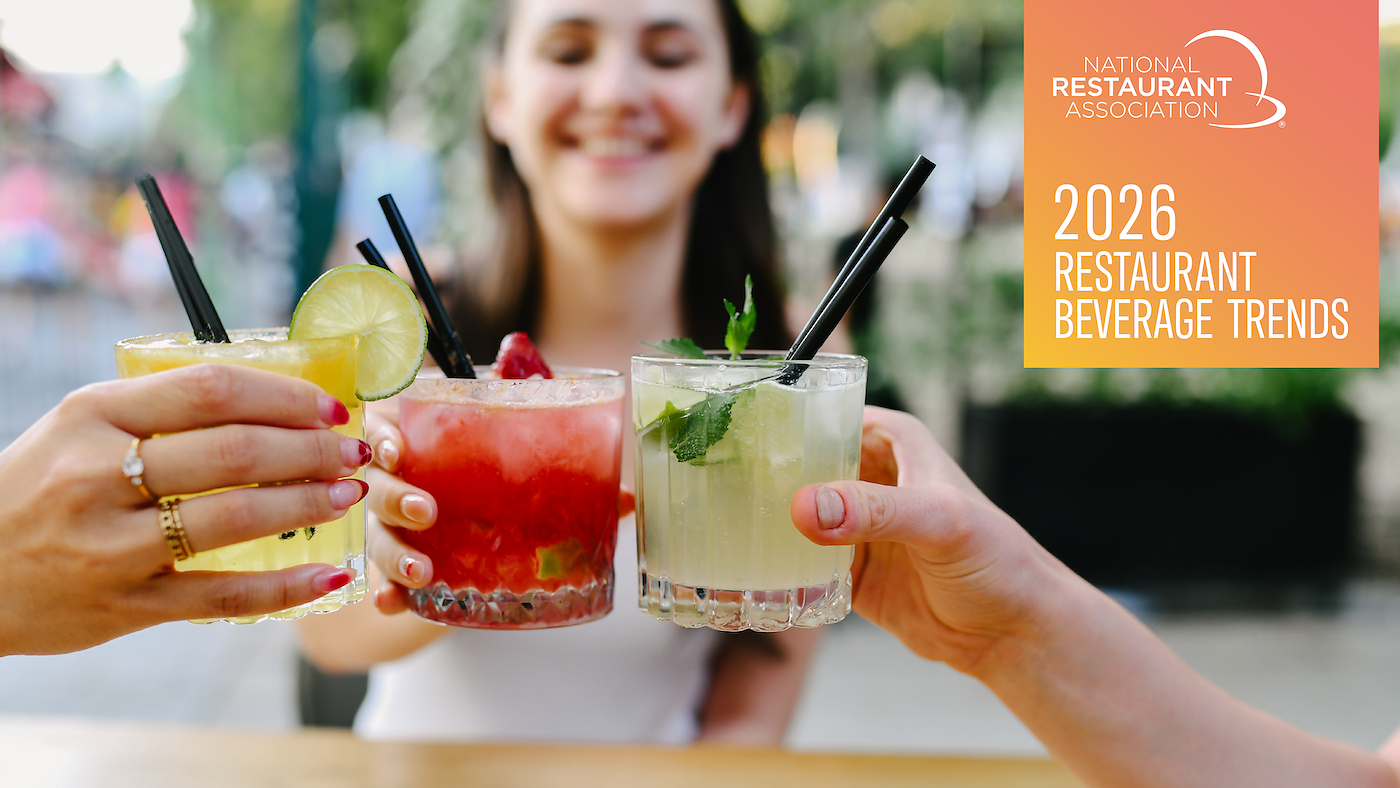
Restaurant beverage programs have crossed a strategic inflection point: operators who treat drinks as an afterthought are leaving measurable traffic and revenue on the table. That's the central finding of the National Restaurant Association's 2026 Restaurant Beverage Trends report, released August 25, which draws on surveys of both operators and consumers to map a rapidly shifting category.
Eighty-seven percent of fullservice operators and 80% of limited-service operators told researchers that beverages can be an important driver of restaurant traffic — and majorities in both segments said offering a larger variety is more important now than it used to be. "Beverages are more than just a drink for today's consumers — they're looking for something that feels personal, memorable, and worth going out for," said Michelle Korsmo, President & CEO of the National Restaurant Association.
The Discovery Economy
Seventy-two percent of surveyed consumers say restaurants are a good place to discover beverages they have never tried before, and 54% say they enjoy being adventurous when selecting a drink. More than half say they wish restaurant menus offered more beverage choices. Younger guests are the most engaged: 71% of both Gen Z and millennial consumers say their favorite restaurant beverages deliver flavor experiences that cannot easily be replicated at home, and roughly seven in ten younger adults want expanded options on menus. That appetite for discovery maps closely to broader beverage industry trends around customization, functional ingredients, and experiential drinking.
The Beverage-Only Occasion
Perhaps the most operationally significant finding is the rise of the beverage-only visit. Thirty-seven percent of consumers make beverage-only purchases at least weekly — a figure that climbs to 50% among Gen Z adults and 47% among millennials. The afternoon daypart is the most popular window for these transactions, pointing to a direct opportunity for operators to drive incremental traffic between traditional meal periods. As consumers grow more selective with discretionary spending, and as GLP-1 use continues to reshape eating habits, beverages are increasingly functioning as an affordable standalone indulgence rather than a meal complement.
Delivery represents another underdeveloped front. Beverage attachment rates for off-premises orders trail on-premises performance, but 83% of delivery customers say improved packaging would lead them to add beverages to delivery orders more often. Among Gen Z and millennial consumers, that figure rises to 89%. Two-thirds of operators say they would actively promote beverages for delivery if better packaging made transport practical — a signal that packaging innovation could unlock meaningful attachment-rate gains across the restaurant delivery and takeout segment.
What Operators Are Adding
Operators are being selective rather than simply expansive. Limited-service operators are prioritizing coffees (46%), teas (31%), smoothies (29%), lemonades (27%), energy drinks (26%), and wellness beverages (24%). Fullservice operators are leaning into both alcoholic and alcohol-free options: mixed cocktails (55%), alcohol-free cocktails (49%), beer (45%), wine (42%), and alcohol-free beer (39%). The alcohol-free cocktail figure — nearly half of fullservice respondents — underscores how the no- and low-alcohol movement has moved from niche to mainstream menu planning.
The report also flags consumer interest in tastings, food-and-beverage pairings, locally sourced drinks, and special beverage events, suggesting that experiential programming can extend the value of a strong beverage menu beyond the glass itself. The 2026 Restaurant Beverage Trends report was produced with presenting sponsor The Coca-Cola Company. Dagmar Boggs, President of Foodservice & On-Premise at The Coca-Cola Company North America, noted that restaurants are "uniquely positioned" to meet growing consumer expectations for choice, personalization, and discovery in what they drink.
Written by Michael Politz, Author of Guide to Restaurant Success: The Proven Process for Starting Any Restaurant Business From Scratch to Success (ISBN: 978-1-119-66896-1), Founder of Food & Beverage Magazine, the leading online magazine and resource in the industry. Designer of the Bluetooth logo and recognized in Entrepreneur Magazine's "Top 40 Under 40" for founding American Wholesale Floral, Politz is also the Co-founder of the Proof Awards and the CPG Awards and a partner in numerous consumer brands across the food and beverage sector.