The Algonquin Hotel, Autograph Collection has completed a multi-year renovation covering every guestroom, corridor, and elevator in its 181-room Midtown Manhattan property — all executed while the hotel stayed fully operational. The project, led by Brooklyn-based firm CRÈME / Jun Aizaki Architecture & Design in collaboration with Highgate Hotels' design arm LUCID, signals a broader push by legacy urban properties to modernize without sacrificing the historic character that differentiates them in a competitive lodging market.
The Culinary Angle
For hospitality operators, the renovation's most immediately actionable thread runs through the hotel's food and beverage outlets. The Blue Bar Restaurant & Lounge has introduced new menu items and cocktails alongside redesigned menus created in partnership with The Al Hirschfeld Foundation, extending the property's art-forward narrative directly into the dining experience. Archival Hirschfeld drawings now anchor the printed menus, tying the F&B program to the same curatorial logic that shaped the guestrooms. The move reflects a wider trend in full-service hotels using beverage program design as a storytelling vehicle — one that deepens guest engagement and creates incremental revenue touchpoints beyond the room rate.
Art as Amenity
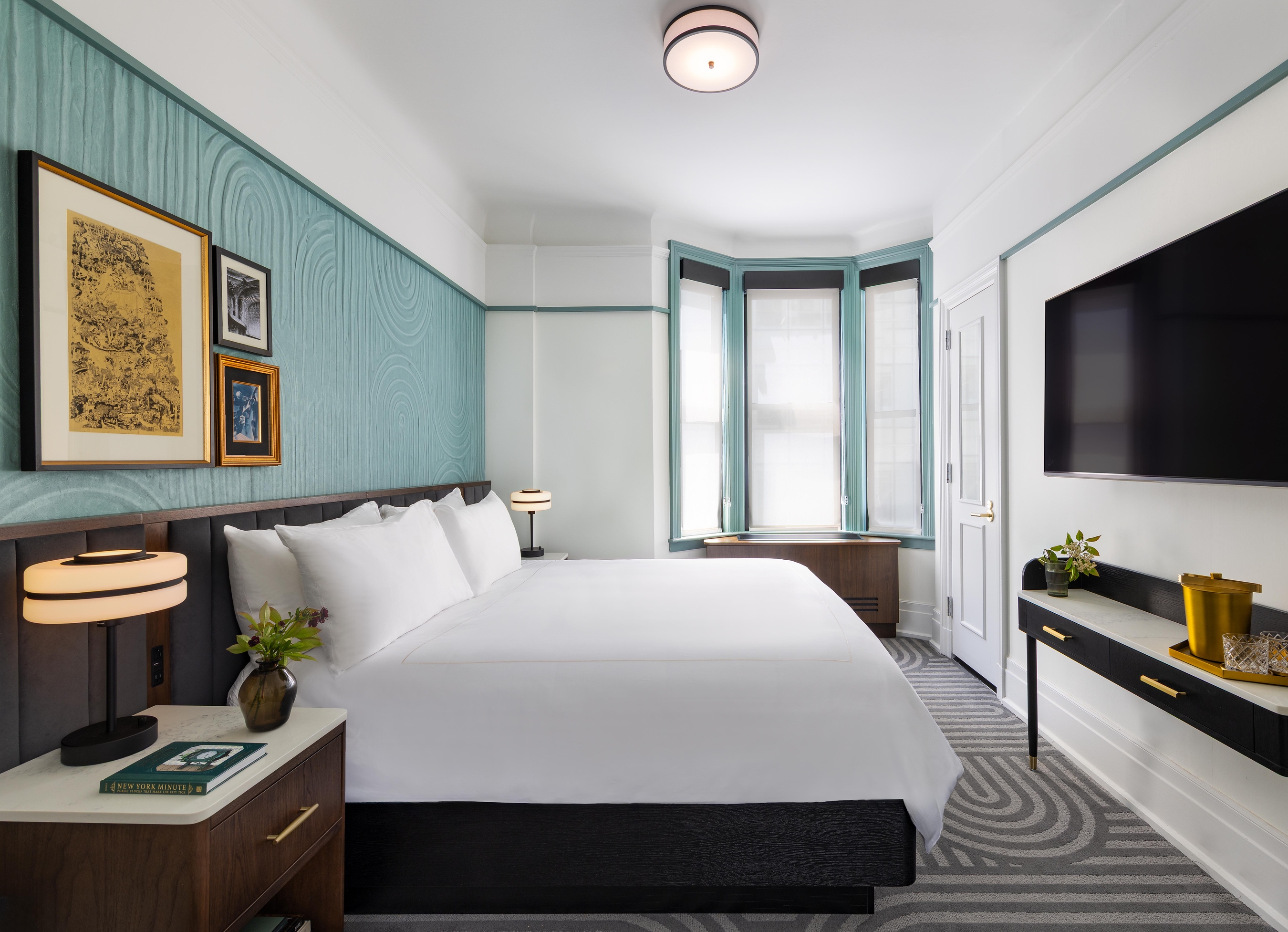
Every guestroom and suite centers on a custom triptych featuring exclusive Al Hirschfeld pieces curated with The Al Hirschfeld Foundation and its Director, David Leopold. A gold leaf-accented Central Park illustration is exclusive to the property. Corridor walls across each floor display a distinct collection drawn from Hirschfeld's 80-year New York career, with many pieces not publicly displayed in decades and others sourced directly from the Foundation's archives. "The Algonquin and Al Hirschfeld share a uniquely New York story rooted in creativity, character and storytelling," Leopold said. "Together, the hotel and foundation curated a collection that can't be found anywhere else."
The design team also introduced oversized luggage-tag-inspired room signage — 181 individually curated quotes from cultural figures connected to the hotel, from Dorothy Parker to The Notorious B.I.G. to Kermit the Frog. Jazz-inspired corridor carpeting, brass fixtures, custom marble-topped furnishings, and a palette of deep celadon, peacock green, and charcoal complete the residential aesthetic without altering the building's historic footprint.
Operator Implications
The Algonquin's approach offers a replicable framework for independent and boutique hotel operators weighing renovation strategy: phase the work to protect occupancy revenue, anchor the design concept to a defensible cultural narrative, and extend that narrative into the F&B program so the investment compounds across multiple guest touchpoints. Willis Loughhead, General Manager of the Algonquin and now in his sixth year leading the property, framed the goal as honoring history without being constrained by it — "timeless rooms where creativity can be sparked."
Properties in similar competitive sets — legacy urban hotels navigating the tension between preservation and modernization — are increasingly investing in hospitality design and renovation as a differentiator against newer lifestyle brands. The Algonquin, which was recently inducted into Historic Hotels of America and named among the Top 25 New York City Hotels by Condé Nast Traveler readers, has positioned this renovation as both a preservation act and a direct pitch to a new generation of culturally oriented travelers and F&B guests.
Written by Michael Politz, Author of Guide to Restaurant Success: The Proven Process for Starting Any Restaurant Business From Scratch to Success (ISBN: 978-1-119-66896-1), Founder of Food & Beverage Magazine, the leading online magazine and resource in the industry. Designer of the Bluetooth logo and recognized in Entrepreneur Magazine's "Top 40 Under 40" for founding American Wholesale Floral, Politz is also the Co-founder of the Proof Awards and the CPG Awards and a partner in numerous consumer brands across the food and beverage sector.