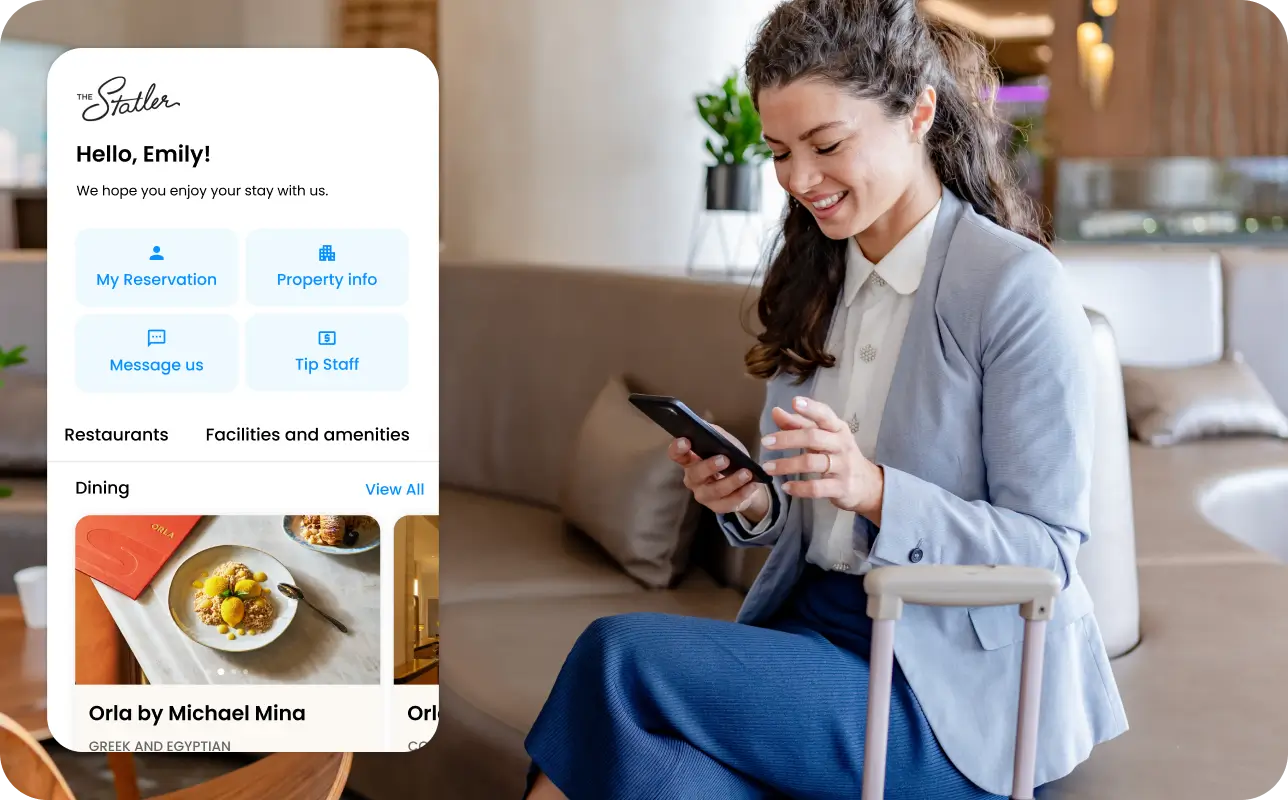
Hotels deploying AI-powered guest messaging saw upsell revenue grow 54% on average in their first six months, according to a new study from Canary Technologies that analyzed more than 10 million guest interactions across thousands of properties in more than 100 countries. The report, titled From Answers to Actions: What Millions of Guest Interactions Reveal About AI Inside the Stay, is the most comprehensive data-driven look yet at how guests actually use AI during a hotel stay — and what that behavior means for the bottom line.
The Core Numbers
The data makes a case for AI that goes well beyond chatbot convenience. Six in 10 AI responses delivered personalized, context-specific answers rather than generic information — a meaningful indicator that the technology is moving past scripted FAQ tools. Guests who engaged with AI were 11% more likely to leave a five-star rating, suggesting that speed of response, not just staff warmth, is a driver of satisfaction scores. For hoteliers managing large portfolios where online reputation directly influences booking conversion, that lift is operationally significant.
The revenue story is equally concrete. Nearly two-thirds of all guest conversations captured in the dataset included a request beyond simple information — reservations, maintenance issues, amenity bookings. Forty-five percent of those action-oriented requests were revenue-generating activities. That volume points to an underutilized commercial channel sitting inside every guest communication touchpoint.
What Operators Should Watch
"Guests want their specific requests taken care of quickly and effectively," said Gurtej Gill, VP of AI Operations and Adoption at Canary Technologies. "Delivering on that takes agentic AI that works across every team and system on property, so hotels can deliver great service, improve operations and drive new revenue."
The concept of agentic AI — systems capable of taking actions across multiple platforms, not just answering questions — is central to the report's conclusions. Canary argues that most service failures stem from hand-offs between teams and systems, and that automation capable of spanning those gaps will define the next wave of hospitality technology adoption. For operators already tracking restaurant and hospitality technology trends, the parallel with automated ordering and kitchen management systems is clear: the efficiency gains come not from replacing staff but from eliminating the friction between them.
Context for the Industry
This is the third AI-focused research report Canary has released, following earlier studies on hotelier attitudes toward AI and adoption intentions. The sequencing is deliberate: the company is building an evidence base at a moment when many operators remain skeptical about whether AI delivers returns beyond marketing claims. Trusted by more than 20,000 hotels in 125+ countries — including Marriott International, Four Seasons, and IHG Hotels & Resorts — Canary occupies a position where its interaction data carries statistical weight.
For hospitality professionals tracking guest experience and revenue management, the report's finding that 45% of action-based guest requests are revenue-generating activities reframes AI messaging as a sales channel, not merely a cost-reduction tool. Full findings are available directly from Canary, and the company is presenting additional results at The Hospitality Show in Miami, November 2–4.
Written by Michael Politz, Author of Guide to Restaurant Success: The Proven Process for Starting Any Restaurant Business From Scratch to Success (ISBN: 978-1-119-66896-1), Founder of Food & Beverage Magazine, the leading online magazine and resource in the industry. Designer of the Bluetooth logo and recognized in Entrepreneur Magazine's "Top 40 Under 40" for founding American Wholesale Floral, Politz is also the Co-founder of the Proof Awards and the CPG Awards and a partner in numerous consumer brands across the food and beverage sector.