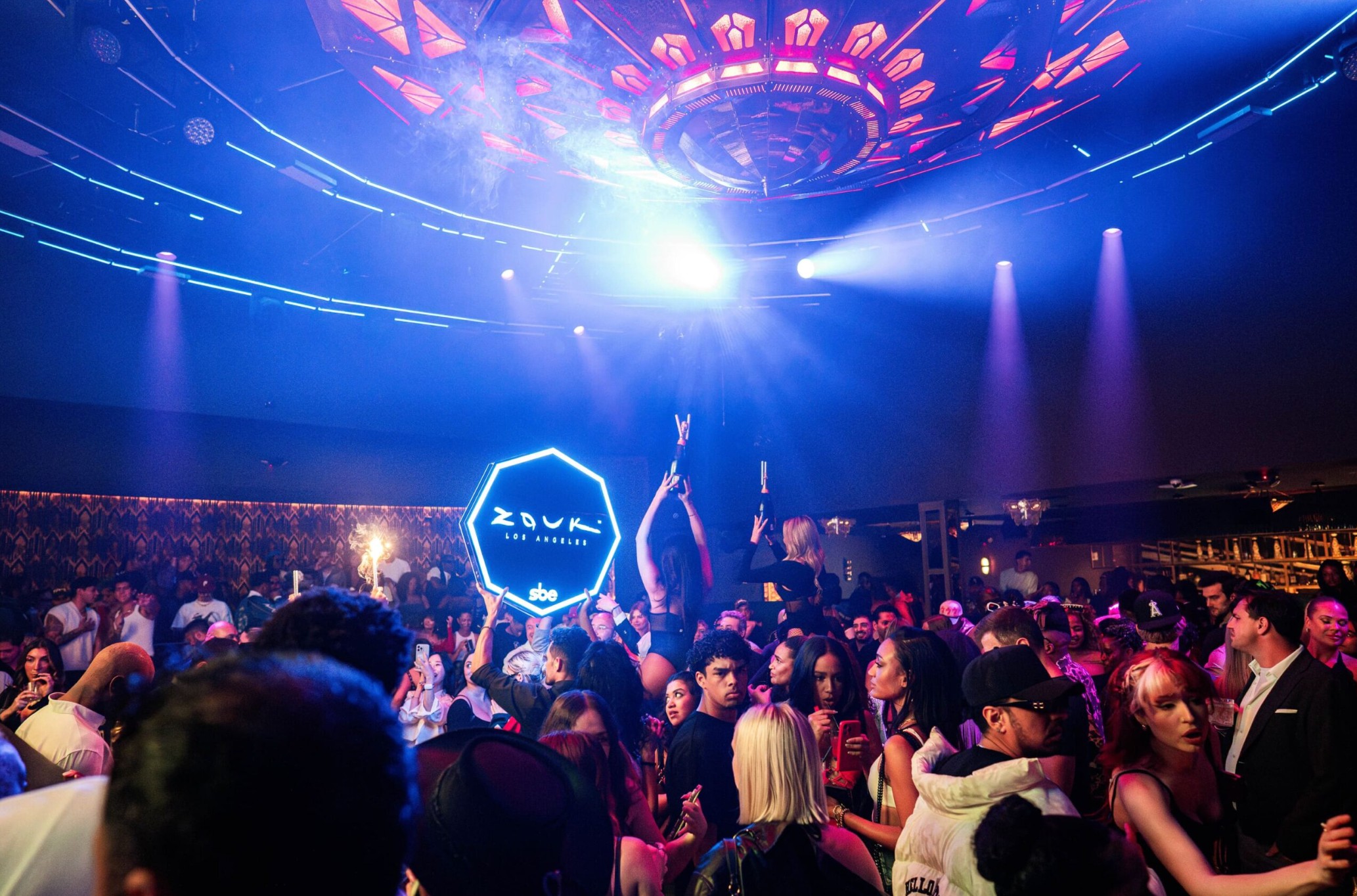
Zouk Los Angeles just closed its first year in West Hollywood, and the numbers tell the story. The 16,500-square-foot nightclub—a partnership between Singapore's Zouk Group and Sam Nazarian's sbe—has pulled Travis Scott, Don Toliver, The Chainsmokers, and Lil Wayne through its doors since opening in March 2024. It's also become the go-to for industry events, hosting Grammy parties and Billboard Power 100 gatherings with guests like Clive Davis, Mariah Carey, Justin Bieber, and Chris Brown.
The venue sits at 643 N La Cienega Boulevard and runs on a production system called The Mothership—a ceiling-mounted LED and lighting rig designed by Christian Schulz and Studio Collective. The club features stadium-style VIP seating, a full bar, an outdoor patio, and a private artist lounge with its own entrance and DJ booth. The programming spans rap, hip-hop, EDM, house, pop, and R&B, pulling from both Zouk's Las Vegas flagship roster and local LA talent.
"Los Angeles is built on culture, creativity, and a passion for world-class experiences," says Hui Lim, Executive Chairman of Zouk Group. "In partnership with Sam Nazarian and sbe, we are setting a new standard for nightlife in LA."
Nazarian, who founded sbe in 2002, says the first year validates the model. "Celebrating our first year of Zouk Los Angeles is a milestone," he says. "Our goal has always been to innovate the nightlife experience, and Zouk LA exemplifies what happens when creativity, hospitality, and design come together."
Zouk Group operates the flagship Zouk in Singapore—consistently ranked Asia's top nightclub—and has expanded to Las Vegas, Kuala Lumpur, and now Los Angeles. sbe's portfolio includes HYDE, Katsuya, and Casa Dani, among others. The LA outpost is the first West Coast location for the Zouk brand, which built its reputation on immersive production and rotating DJ talent before expanding into the U.S. market.
The one-year mark matters because West Hollywood nightlife is notoriously tough to crack. Zouk LA's ability to lock down marquee talent and exclusive industry events in its first 12 months suggests it's not just surviving—it's reshaping the competitive set. The real test is whether it can sustain the momentum as the novelty wears off and operational realities set in.