
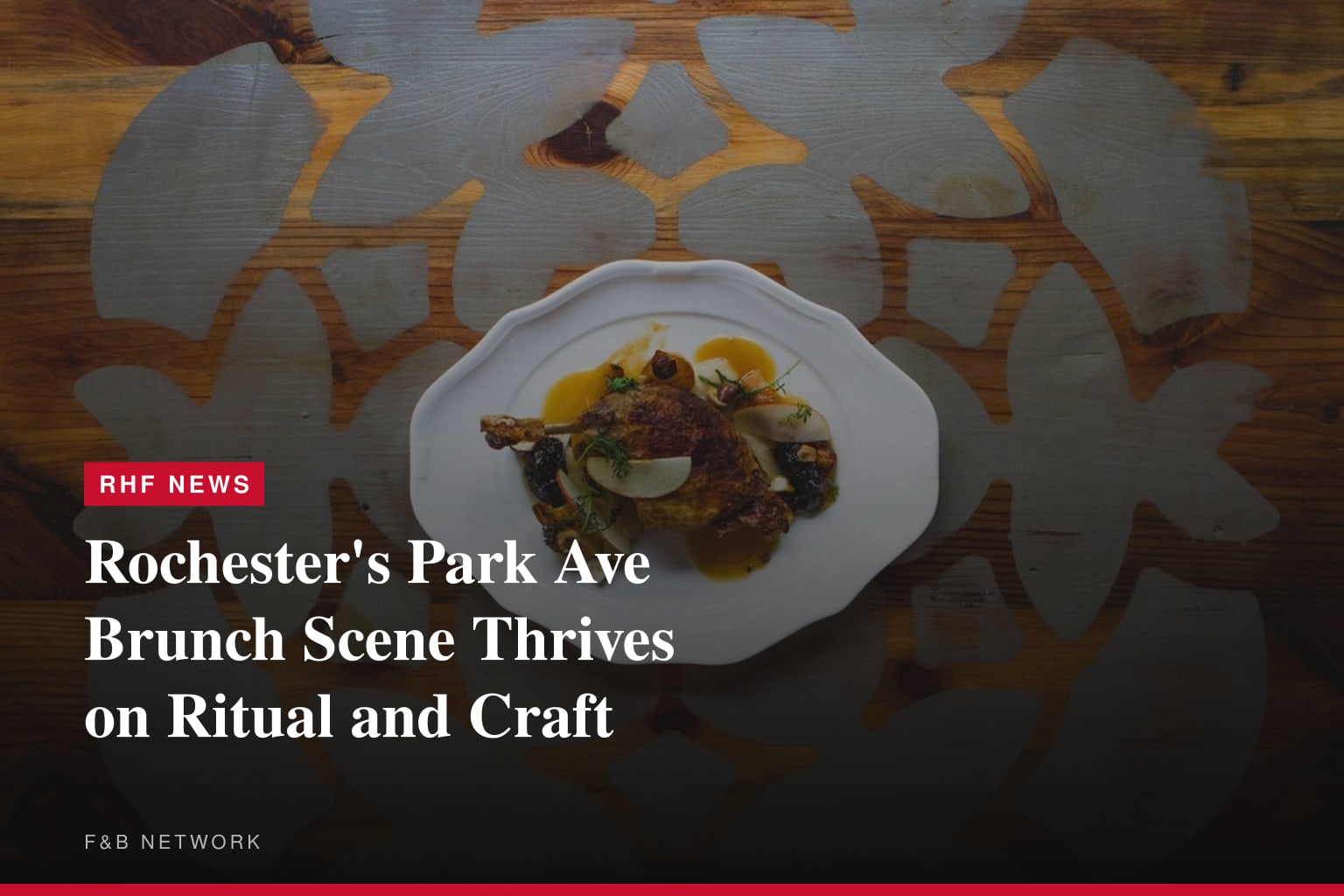
Rochester's Park Avenue dining corridor is earning a reputation for brunch that goes well beyond eggs and mimosas. Mike Gangemi, executive chef at The Frog Pond on Park, says the neighborhood's weekend daypart succeeds because operators treat it as a curated experience rather than a volume play — a lesson with implications for any restaurant looking to strengthen its brunch program.
Gangemi describes a guest mindset on Park Avenue that favors slower pacing and deliberate menu exploration. Rather than defaulting to familiar standbys, diners arrive expecting dishes that reflect a kitchen's individual point of view. That expectation pushes chefs to move beyond formula. Eggs arrive baked with seasoned vegetables or folded with sharp cheeses and fresh herbs. Pancakes come layered with fruit compotes or aromatic syrups in place of standard maple. Each plate signals that the kitchen made a creative decision, not just executed a template.
For operators, the takeaway is that menu differentiation at brunch drives return visits more reliably than price or convenience alone. When a restaurant's brunch identity is tied to the character of its surrounding neighborhood — its pace, its regulars, its weekend energy — guests begin treating the meal as a ritual rather than a transaction. That loyalty is difficult for competitors to replicate and pays dividends beyond the daypart itself. Operators exploring how to build that kind of stickiness can draw on broader restaurant hospitality trends shaping dining room strategy in 2026.
The Park Avenue corridor in Rochester illustrates how mid-market urban neighborhoods can punch above their weight in food culture when independent operators invest in craft and consistency. Gangemi's approach — emphasizing thoughtful ingredient combinations and an unhurried atmosphere — mirrors a wider shift documented across the food and beverage industry toward experience-led dining that competes on meaning rather than speed. As brunch continues to be one of the highest-margin dayparts in the casual and upscale-casual segments, the strategies Gangemi employs offer a practical template for chefs and operators looking to deepen guest engagement without a full menu overhaul.
Written by Michael Politz, Author of Guide to Restaurant Success: The Proven Process for Starting Any Restaurant Business From Scratch to Success (ISBN: 978-1-119-66896-1), Founder of Food & Beverage Magazine, the leading online magazine and resource in the industry. Designer of the Bluetooth logo and recognized in Entrepreneur Magazine's "Top 40 Under 40" for founding American Wholesale Floral, Politz is also the Co-founder of the Proof Awards and the CPG Awards and a partner in numerous consumer brands across the food and beverage sector.