
Plant-Based Fish Market Set to Hit $3.6B by 2036
A 14.9% annual growth rate signals serious runway for operators willing to put alt-seafood on the menu now.
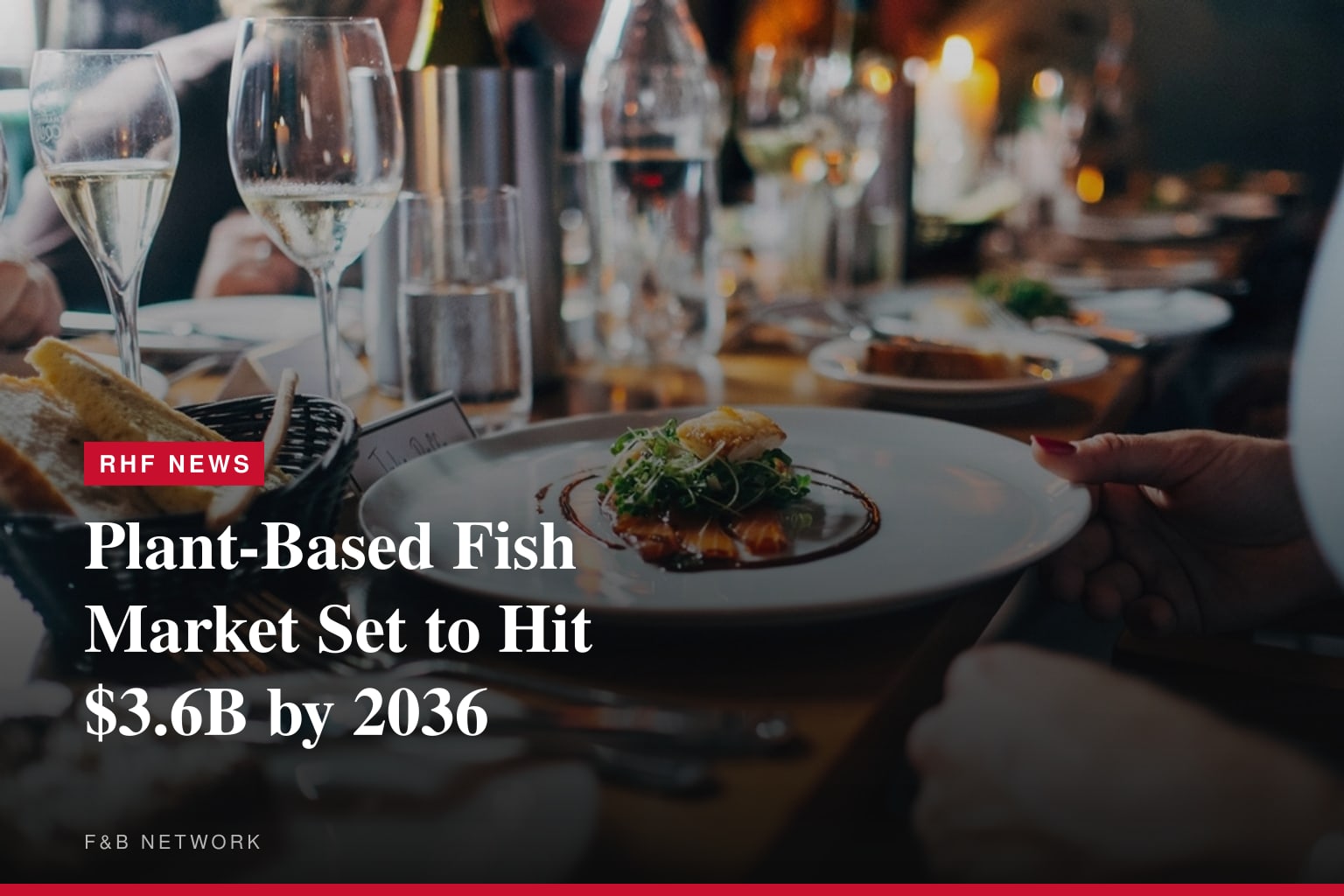
The global plant-based fish market is on track to quadruple in size over the next decade, climbing from $0.8 billion in 2025 to $3.6 billion by 2036, according to new research from Future Market Insights (FMI). The 14.9% compound annual growth rate projected for the category outpaces most alternative protein segments and reflects accelerating demand across retail, quick-service, and full-service dining channels.
For restaurant and foodservice operators, the timing matters. Consumers are actively seeking sustainable protein options, and plant-based fish—long overshadowed by plant-based beef and chicken—is emerging as a credible menu category in its own right. FMI points to expanding commercialization across supermarkets, QSR outlets, and digital grocery channels as evidence that the infrastructure supporting these products is maturing rapidly. Operators who establish early familiarity with the category stand to benefit as consumer recognition grows.
Manufacturers are pouring investment into the ingredient and processing side of the equation. Algae- and seaweed-based ingredient systems, advanced extrusion technologies, and fish-specific formulation platforms are all being deployed to close the sensory gap between plant-based and conventional seafood. Texture—historically the sticking point for alt-fish products—is the primary battleground, and suppliers report meaningful progress on flake structure, moisture retention, and mouthfeel that more closely mimics wild-caught species. Operators sourcing for menu trials should expect a noticeably improved product landscape compared to even two years ago.
The clean-label angle adds another layer of appeal for menu positioning. As covered in our [restaurant technology and menu innovation coverage](/restaurants/technology), diners increasingly scrutinize ingredient lists, and plant-based fish products built on recognizable inputs like pea protein, konjac, and seaweed carry a distinct advantage in that environment. Pairing strong sourcing stories with transparent menu language can deepen the value proposition for sustainability-minded guests.
The broader [beverage and food industry trends](/food/industry-trends) around sustainable nutrition are clearly converging on seafood. Legacy frozen food manufacturers and emerging alternative protein startups are both scaling production, which should keep pricing competitive and supply more reliable for foodservice buyers. [Food & Beverage Magazine](https://fb101.com/?utm_source=rhfnews&utm_campaign=powered_by) has tracked similar momentum across adjacent protein categories, and the pattern suggests plant-based fish is following a familiar adoption curve—one that rewards operators who engage early rather than waiting for the category to fully mainstream.
Written by Michael Politz, Author of [Guide to Restaurant Success: The Proven Process for Starting Any Restaurant Business From Scratch to Success (ISBN: 978-1-119-66896-1)](https://www.amazon.com/Beverage-Magazines-Guide-Restaurant-Success/dp/1119668964), Founder of Food & Beverage Magazine, the leading online magazine and resource in the industry. Designer of the Bluetooth logo and recognized in Entrepreneur Magazine's "Top 40 Under 40" for founding American Wholesale Floral, Politz is also the Co-founder of the Proof Awards and the CPG Awards and a partner in numerous consumer brands across the food and beverage sector.